
NerveCalm Review 2026
A detailed analysis of NerveCalm, its ingredients, benefits, and whether it’s worth trying in 2026.


Weight loss culture often frames nutrition around strict elimination: cutting entire macronutrient groups, relying on extreme caloric deficits, or searching for foods that claim to “melt fat” overnight.
In clinical reality, individual foods do not burn body fat on their own. Sustained weight management depends on overall energy balance, metabolic health, and lifestyle consistency. However, the foods you choose to build your daily meals around make a profound difference in how easily you manage that balance.
Certain whole foods support healthy weight management by promoting lasting satiety, providing high micronutrient density with moderate caloric load, stabilizing postprandial glucose, and nourishing a diverse gut microbiome. Below are 16 nutrient-dense foods supported by nutritional science that help make sustainable eating practical, satisfying, and effective.
Dietary protein plays an established physiological role in appetite regulation and energy balance. Protein increases the release of satiety hormones (including peptide YY and GLP-1) while reducing levels of the hunger hormone ghrelin. It also possesses a higher thermic effect of food (TEF) compared to fats or carbohydrates, meaning your body expends slightly more energy digesting and metabolizing it.
Whole eggs are among the most nutrient-dense foods available, providing high-biological-value protein along with choline, lutein, and essential fat-soluble vitamins. Controlled trials have repeatedly shown that breakfast meals featuring eggs promote significantly greater fullness and lower total caloric intake over the subsequent 24 to 36 hours compared to bagel- or grain-heavy breakfasts of equivalent calories.

Fatty fish like salmon, mackerel, and sardines supply complete, easily digestible protein alongside long-chain omega-3 fatty acids (EPA and DHA). Beyond supporting cardiovascular health, the combination of high-density protein and healthy fats helps delay gastric emptying, keeping you satisfied longer between meals while reducing systemic inflammatory markers associated with metabolic dysfunction.
Lean poultry offers an exceptional protein-to-calorie ratio, providing approximately 25 to 30 grams of protein per 100-gram serving with minimal saturated fat. For individuals managing daily energy intake, prioritizing lean protein sources allows you to maintain adequate protein intake to preserve lean muscle tissue during a calorie deficit without consuming excess background calories.
Strained Greek yogurt and cottage cheese provide concentrated dairy proteins—principally slow-digesting micellar casein and whey. Casein breaks down slowly in the digestive tract, ensuring a steady, prolonged release of amino acids that helps curb mid-afternoon cravings. Opting for plain, unsweetened varieties avoids the added sugars common in flavored commercial yogurts.
Dietary fiber provides bulk without adding usable calories. Viscous and soluble fibers absorb water in the stomach, forming a gel-like matrix that slows nutrient absorption, blunts sharp postprandial glucose spikes, and signals fullness to the central nervous system. Furthermore, prebiotic fibers nourish beneficial bacteria in the colon, which ferment them into short-chain fatty acids (SCFAs) that help regulate metabolic signaling.

Whole rolled or steel-cut oats are exceptionally rich in beta-glucan, a viscous soluble fiber with well-documented metabolic benefits. Beta-glucan increases the viscosity of digested food in the stomach, delaying stomach emptying and stimulating the release of peptide YY, one of the body’s primary satiety signals.
Beans, chickpeas, and lentils provide a powerful nutritional synergy: high amounts of both complex dietary fiber and plant protein. This combination results in a remarkably low glycemic response and supports steady energy levels. Clinical trials consistently demonstrate that meals containing legumes lead to higher self-reported fullness scores than equivalent pasta or bread meals.
Chia seeds contain roughly 10 grams of dietary fiber per 28-gram (two-tablespoon) serving, consisting predominantly of soluble fiber. When mixed with liquid, chia seeds expand and form a thick gel. This structural property slows the rate of digestion and promotes gastric fullness when added to oatmeal, smoothies, or yogurt.
Berries deliver high concentrations of dietary fiber alongside potent anthocyanin antioxidants, while remaining relatively low in total sugar and calories compared to other fruits. A cup of raspberries, for example, delivers 8 grams of fiber for just over 60 calories, making them one of the most effective foods for satisfying a sweet palate during weight management.
Apples and pears are high in water volume and rich in pectin, a soluble fiber that slows gastric transit. Eating whole fruit requires chewing and mechanical breakdown, which stimulates cephalic digestive signaling and promotes earlier meal termination compared to consuming fruit juices or liquid smoothies.
Ground flaxseeds offer soluble mucilage fiber and alpha-linolenic acid (ALA), a plant-based omega-3 fatty acid. In the digestive tract, flax mucilage acts as a prebiotic substrate, feeding beneficial gut microbes that play a role in metabolic and digestive regularity.
Volumetric eating involves choosing foods with high water and fiber content relative to their weight and calories. This allows you to fill your stomach, activate mechanical stretch receptors that signal fullness to your brain, and enjoy substantial portions while naturally moderating total caloric intake.

Dark leafy greens have an exceptionally low caloric density combined with high levels of folate, magnesium, potassium, and vitamins A, C, and K. Adding raw or lightly steamed greens to meals significantly increases the volume and visual plate coverage of a dish without meaningful additions to total calorie counts.
Cruciferous vegetables combine dietary fiber, high water content, and sulfur-containing phytochemicals like sulforaphane. Their dense fibrous structure requires thorough chewing, which aids slower eating pace and improves portion awareness.
While frequently demonized by low-carb trends, plain boiled white or sweet potatoes consistently score highest among common foods on the clinical Satiety Index developed in nutritional research. Boiled potatoes deliver high satiety per calorie, and when cooled, a portion of their starches converts into resistant starch, an indigestible fiber that feeds the gut microbiome.
Unlike most other fruits, avocados are composed primarily of heart-healthy monounsaturated oleic acid rather than simple sugars, accompanied by substantial dietary fiber. While energy-dense, incorporating modest portions of avocado into salads or grain bowls significantly enhances post-meal satiety and improves the bioavailability of fat-soluble vitamins from accompanying vegetables.
Nuts provide a balanced blend of protein, fiber, and unsaturated fatty acids. Controlled feeding trials demonstrate that regular, portion-controlled nut intake does not contribute to weight gain despite their high calorie density. Due to the cellular wall structure of raw and roasted nuts, a portion of their fat is excreted rather than fully digested and absorbed.
While not a solid food, unsweetened brewed green tea provides bioactive catechins, most notably epigallocatechin gallate (EGCG), alongside mild amounts of caffeine. Clinical research indicates that green tea catechins provide modest support for cellular energy expenditure and thermogenesis. However, its primary practical value during weight management is replacing caloric, sugar-sweetened beverages with a zero-calorie, polyphenol-rich alternative.
| Food | Key Nutritional Driver | Primary Satiety & Metabolic Role |
|---|---|---|
| Whole Eggs | High-biological protein, choline | Suppresses ghrelin, sustains morning fullness |
| Wild Salmon | Complete protein, Omega-3s (EPA/DHA) | Delays gastric emptying, anti-inflammatory support |
| Lean Poultry | Dense low-fat protein | Preserves lean muscle mass during caloric deficits |
| Greek Yogurt | Micellar casein protein, probiotics | Slow amino acid release, digestive flora support |
| Rolled Oats | Viscous soluble beta-glucan | Increases meal viscosity, releases peptide YY |
| Legumes & Lentils | Complex fiber, plant protein | Blunts blood sugar spikes, stabilizes appetite |
| Chia & Flaxseeds | Soluble mucilage, plant Omega-3s | Forms expanding gastric gel, feeds gut microbes |
| Berries | Anthocyanins, high dietary fiber | Low calorie-to-fiber ratio, satisfies sweetness |
| Leafy Greens & Cruciferous | High water volume, insoluble fiber | Volumetric stomach fullness, low energy density |
| Boiled Potatoes | Resistant starch (when cooled), potassium | Highest score on clinical satiety index tables |
| Avocados & Nuts | Monounsaturated fats, dietary fiber | Prolongs satiety, incomplete nut lipid absorption |
| Green Tea | EGCG catechins, mild caffeine | Supports thermogenesis, replaces sugary drinks |
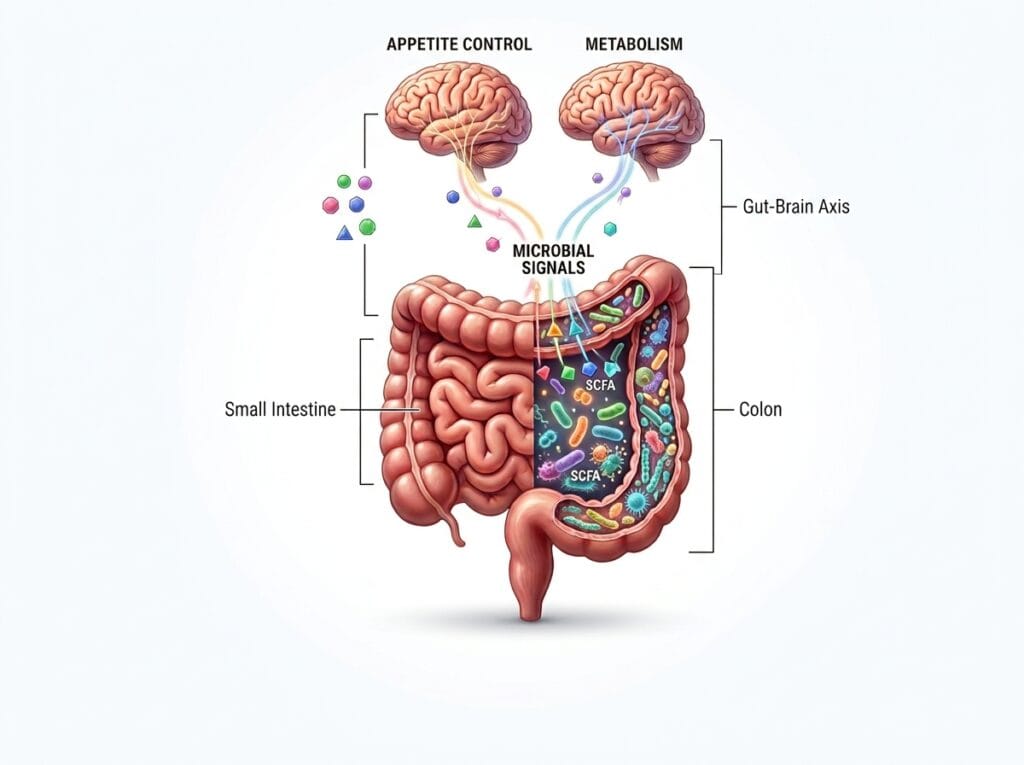
Notice how many of the foods above—oats, berries, legumes, flaxseeds, and fermented dairy—actively interact with your digestive tract. Over the past decade, nutritional gastroenterology has highlighted that weight regulation is not solely a calculation of calories consumed versus calories burned.
The bacterial composition of your gut microbiome plays a substantial role in metabolic homeostasis. When beneficial bacteria thrive on diverse dietary fibers, they produce short-chain fatty acids like acetate, propionate, and butyrate. These compounds interact directly with gut endocrine cells to signal satiety to the brain and help support insulin sensitivity.
While whole foods provide the foundational fuel for microbial diversity, maintaining bacterial balance can be challenging during periods of chronic stress, poor sleep, or dietary transitions. If you are exploring targeted probiotic support to complement a balanced diet, you can read our evidence-based LeanBiome Review: An In-Depth Look at Ingredients and Gut Microbiome Science, which examines how specific probiotic strains and green tea phytosomes are studied for digestive and metabolic support.
No single food causes targeted fat loss from specific body areas. Spot reduction is a physiological myth. Foods support weight loss indirectly by keeping you full, preventing energy crashes, and making it manageable to maintain a sustainable, moderate caloric deficit without severe hunger.
No. Eliminating complex carbohydrates is not necessary for successful weight management. While reducing refined sugars and processed flours is metabolically beneficial, whole carbohydrate sources like oats, legumes, berries, and potatoes provide essential dietary fibers that support satiety and gut bacteria.
General dietary guidelines recommend approximately 25 grams of dietary fiber per day for adult women and 38 grams per day for adult men. When increasing fiber intake, do so gradually over several weeks and drink plenty of water to minimize temporary digestive bloating or gas.
1. Holt, S. H., et al. (1995). A satiety index of common foods. European Journal of Clinical Nutrition, 49(9), 675–690.
2. Leidy, H. J., et al. (2015). The role of protein in weight loss and maintenance. The American Journal of Clinical Nutrition, 101(6), 1320S–1329S. DOI: 10.3945/ajcn.114.084038.
3. Slavin, J. L. (2005). Dietary fiber and body weight. Nutrition, 21(3), 411–418. DOI: 10.1016/j.nut.2004.08.018.
4. Cani, P. D., et al. (2019). Microbial regulation of organismal energy homeostasis. Nature Metabolism, 1(1), 34–46. DOI: 10.1038/s42255-018-0017-4.
5. Hursel, R., & Westerterp-Plantenga, M. S. (2013). Catechin- and caffeine-rich teas for control of body weight in humans. The American Journal of Clinical Nutrition, 98(6), 1682S–1693S. DOI: 10.3945/ajcn.113.058396.
Medical Disclaimer: The information provided in this article is for educational purposes only and does not substitute professional medical advice, diagnosis, or treatment. Always consult your physician before starting any new health regimen.
A detailed analysis of NerveCalm, its ingredients, benefits, and whether it’s worth trying in 2026.
A detailed analysis of NerveCalm, its ingredients, benefits, and whether it’s worth trying in 2026.