Burning Feet at Night: Common Causes and What Actually Helps
Discover why your feet burn at night, from nerve irritation and circulation shifts to everyday foot fatigue, and learn safe, practical steps to find evening comfort.

Most people have experienced the familiar tingling sensation when a foot falls asleep after sitting awkwardly. Usually, shifting position restores normal sensation within a minute or two.
However, when unusual sensory or motor symptoms linger, recur frequently, or steadily worsen, they may signal an underlying issue with the peripheral nervous system.
Your peripheral nerves form an extensive communication network connecting the brain and spinal cord to your skin, muscles, and internal organs. When these nerve fibers are affected by mechanical compression, metabolic factors, inflammation, or other health conditions, they can send distorted signals or stop transmitting messages properly.
Recognizing potential warning signs early allows you to seek a proper medical evaluation and address the root cause before minor nerve irritation leads to progressive damage.
Peripheral neuropathy is not a single disease. It is a broad medical term for disorders that develop when peripheral nerves are damaged or disrupted.
The symptoms a person experiences depend largely on which types of nerve fibers are involved:
Sensory fibers: Transmit information about temperature, light touch, vibration, and pain to the brain.
Motor fibers: Carry signals from the brain to muscles to control conscious movement, balance, and coordination.
Autonomic fibers: Help regulate involuntary bodily functions, including blood pressure, sweating, and digestion.
In a common presentation—known as distal symmetric polyneuropathy—symptoms typically begin in the toes and feet before slowly progressing upward. This occurs because the longest nerve fibers in the body are often the most vulnerable to systemic metabolic or toxic stress.
However, not all neuropathies follow this length-dependent pattern. Some conditions affect a single isolated nerve (mononeuropathy), while others produce patchy or multifocal symptoms across different areas of the body.
The following symptoms are common warning signs associated with peripheral nerve irritation or neuropathy. Because many of these sensations have multiple potential causes, they do not automatically prove that permanent nerve damage has occurred.
Known medically as paresthesia, this sensation feels like mild prickling, buzzing, or static under the skin.
While temporary tingling is often caused by brief mechanical compression—such as crossing your legs tightly—persistent paresthesia may continue or recur even when there is no obvious posture-related trigger. It may come and go initially, but can become a regular occurrence in the feet or hands.
Common alternative causes: Brief postural compression, focal nerve entrapment, or mild circulatory changes.
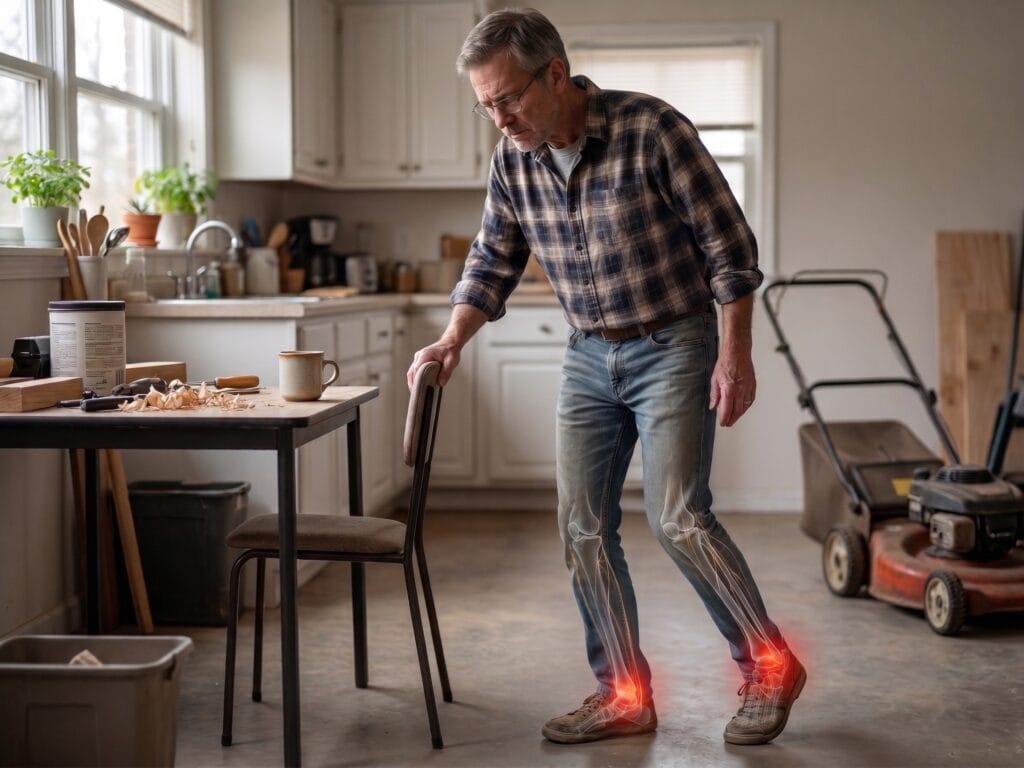
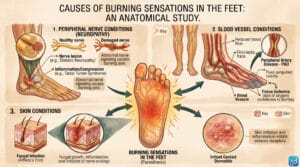
A persistent warm or burning feeling—particularly on the soles of the feet—can be a symptom of small-fiber sensory neuropathy.
Many people notice that this discomfort feels more prominent in the evening or while resting in bed. However, burning feet are not specific to neuropathy and can arise from localized foot conditions. To learn more about nighttime discomfort and practical management strategies, read our guide on Burning Feet at Night: Common Causes and What Actually Helps.
Common alternative causes: Plantar fasciitis, fungal skin infections (athlete’s foot), or contact dermatitis.
When sensory nerve fibers are significantly disrupted, the brain receives fewer signals rather than distorted ones. This can feel like a dullness in the toes or fingers, often described as walking on cardboard or wearing invisible gloves.
Reduced sensation can make it harder to detect changes in water temperature or feel a small pebble inside your shoe.
Common alternative causes: Focal nerve entrapment (such as a pinched nerve in the lower back or neck), carpal tunnel syndrome, or localized vascular issues.
In some cases of nerve irritation, sensory pathways become unusually sensitive. This response, known as allodynia, causes normal, non-painful stimuli to feel uncomfortable or sharp.
For example, the light weight of a bedsheet resting on the feet, wearing snug socks, or feeling a gentle breeze on the skin may trigger an exaggerated burning or painful sensation.
Common alternative causes: Recent sunburn, acute dermatological irritation, or localized skin trauma.
When motor nerve fibers are involved, the electrical signals that instruct muscles to contract can become weak or uncoordinated.
In the hands, this may appear as difficulty buttoning clothes, turning keys, or unintentionally dropping objects. In the lower limbs, motor weakness can cause the front of the foot to drag slightly while walking (foot drop), leading to occasional tripping.
Common alternative causes: Muscle deconditioning, joint disorders like arthritis, or general physical fatigue.
Specialized sensory nerves located in muscles and joints provide continuous feedback about body position in space (proprioception).
When these sensory signals are impaired, maintaining balance becomes more challenging. A person might feel unsteady when walking on uneven ground, struggle to balance while closing their eyes in the shower, or feel insecure walking in dimly lit rooms.
Common alternative causes: Inner ear (vestibular) disorders, medication side effects, vision changes, or joint stiffness.
Motor nerves normally send organized signals to coordinate muscle activity. When motor axons become irritated, they can generate spontaneous, involuntary firings.
This may cause visible muscle twitches (fasciculations) or muscle spasms. However, muscle twitches and nighttime cramps are very common in the general population and are rarely caused by neuropathy alone. When persistent twitching is accompanied by progressive muscle weakness or muscle wasting, medical evaluation is advised.
Common alternative causes: Dehydration, strenuous physical exertion, electrolyte imbalances, stress, or caffeine intake.
Nerve symptoms are warning signs that warrant careful investigation to determine what is placing stress on the nervous system:
Diabetes and metabolic factors: Diabetes is one of the most common causes of peripheral neuropathy, and distal symmetric polyneuropathy is a frequent complication of chronic elevated blood sugar.
Nutritional imbalances: The nervous system relies on specific vitamins to maintain healthy nerve structure. Deficiencies in vitamins such as B12, as well as chronic excessive intake of certain nutrients like vitamin B6, can lead to neuropathy. For an evidence-based review of nutrient roles and safety, read The Best Vitamins and Nutrients for Nerve Health: What Science Actually Shows.
Mechanical compression: Herniated spinal discs, bone spurs, or repetitive motion injuries (such as carpal tunnel syndrome) can physically compress individual nerve roots or peripheral branches.
Other medical conditions: Autoimmune disorders, kidney disease, thyroid dysfunction, excessive alcohol consumption, and certain medications (including specific chemotherapy regimens) can all affect peripheral nerve function.
Daily botanical support: For those seeking plant-based nutritional support for nerve relaxation and antioxidant balance, read our objective evaluation in the NerveCalm Review.
Occasional, temporary numbness that resolves with movement is generally harmless. However, if sensory or motor symptoms persist for several weeks, return frequently, or progressively spread, scheduling an appointment with a healthcare provider is the safest approach.
During an evaluation, a clinician can perform a targeted neurological examination—evaluating reflexes, muscle strength, and sensitivity to vibration and light touch. Depending on your medical history, they may also order selected laboratory tests or electrodiagnostic studies (such as electromyography or nerve conduction studies) to identify the underlying cause.
Tingling that persists over weeks
Gradual loss of sensation in toes or fingers
Recurring burning sensations in the feet
Mild, unexplained balance issues
Sudden, rapidly progressing muscle weakness
Numbness or weakness spreading rapidly over hours or days
New bowel or bladder dysfunction combined with saddle/groin numbness or leg weakness
An open cut, blister, or signs of localized infection on a numb area of the foot
No. Tingling simply indicates that sensory nerve fibers are irritated or temporarily compressed. When the underlying cause is identified and addressed early—such as relieving mechanical pressure or treating a specific nutritional deficiency—nerve function can often improve or stabilize.
Yes. Conditions like peripheral artery disease can cause leg pain, numbness, or cramping. While circulatory symptoms often worsen during walking and improve with rest, symptoms of vascular disease and neuropathy can overlap. A clinical examination is necessary to properly differentiate between circulatory and neurological causes.
Keep a simple record of your symptoms: note when they started, what they feel like, and whether specific activities or times of day make them better or worse. Share this information with your primary care physician so they can perform an appropriate physical exam and determine whether further testing is needed.
National Institute of Neurological Disorders and Stroke (NINDS / NIH). Peripheral Neuropathy Fact Sheet. (Updated 2023). Available at: ninds.nih.gov.
Mayo Clinic. Peripheral Neuropathy: Symptoms & Causes. (Updated 2023). Available at: mayoclinic.org.
Cleveland Clinic. Neuropathy (Peripheral Neuropathy): Symptoms, Causes & Prevention. (Updated 2024). Available at: my.clevelandclinic.org.
American Diabetes Association (ADA). Standards of Care in Diabetes—2024: Neuropathy. Diabetes Care, 47(Suppl. 1), S179–S190. DOI: 10.2337/dc24-S010.
Medical Disclaimer: The information provided in this article is for educational purposes only and does not substitute professional medical advice, diagnosis, or treatment. Always consult your physician before starting any new health regimen.

Discover why your feet burn at night, from nerve irritation and circulation shifts to everyday foot fatigue, and learn safe, practical steps to find evening comfort.


An evidence-based guide to 16 nutrient-dense foods that support satiety, gut health, and steady metabolic function as part of a balanced weight management routine.

A detailed analysis of LeanBiome, its ingredients, benefits, and whether it’s worth trying in 2026.

Does GLPro really support healthy blood sugar and reduce cravings? We examine the ingredients, clinical research, real pricing, and guarantee terms.

Does GLPro really support healthy blood sugar and reduce cravings? We examine the ingredients, clinical research, real pricing, and guarantee terms.

A detailed analysis of LeanBiome, its ingredients, benefits, and whether it’s worth trying in 2026.