Independent Reviews • Evidence-Based • Updated Regularly

Burning Feet at Night: Common Causes and What Actually Helps

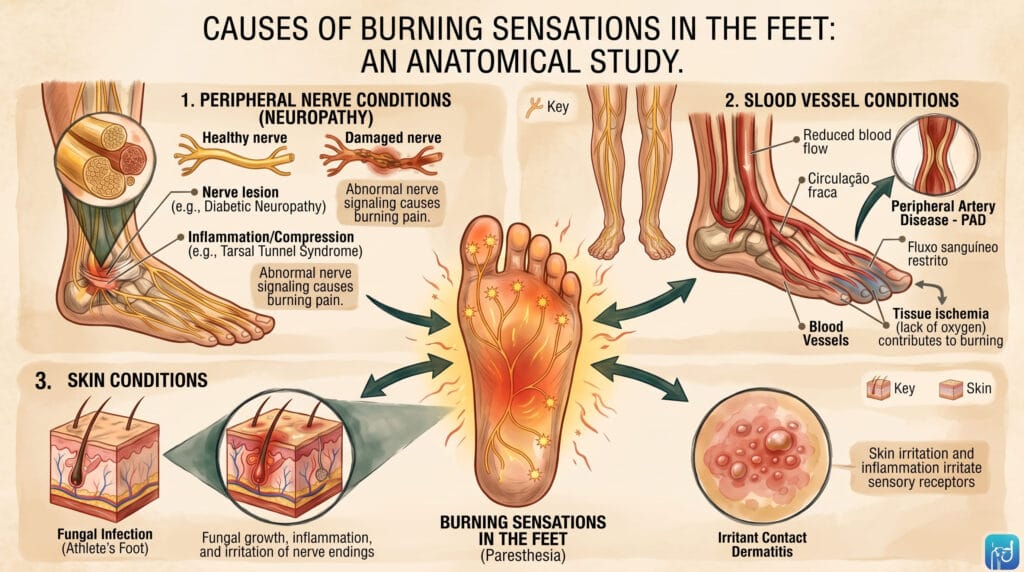
Medical illustration showing peripheral nerves, blood vessels, and skin layers contributing to burning feet at night.

Few things disrupt a good night’s rest quite like the sensation of your feet burning the moment you try to sleep. Whether it feels like a dull, radiating warmth, an irritating prickle, or an intense heat on the soles of your feet, nighttime foot discomfort is a widespread and frustrating experience.

Because burning feet can stem from several body systems, the sensation itself is a symptom rather than a standalone medical condition. It can point to peripheral nerve irritation, localized skin conditions, mechanical strain from daytime activity, or circulation changes.

Understanding why your feet feel this way in the evening—and knowing which practical habits actually offer safe relief—is the best way to regain nighttime comfort without relying on unproven remedies or overlooking important warning signs.

Why Burning Feet Often Feel Worse in the Evening

Many people find that foot discomfort becomes noticeably more intense once they lie down in bed. While researchers continue to study how sensory perception shifts across the 24-hour cycle, several practical factors explain why evenings can be particularly challenging:

  • Fewer everyday distractions: During the day, movement, work, and ambient sensory inputs keep your brain busy. In a quiet, dark room, sensory signals from your feet no longer have to compete for your attention.

  • Trapped heat under bedcovers: Heavy blankets, synthetic sheets, or snug socks trap body heat around your lower extremities, raising local skin temperature and irritating sensitive nerve endings.

  • Shift to a resting position: Lying flat changes blood distribution and removes physical pressure after hours of standing or walking, altering how circulation and tissue strain feel in the lower legs.

Quick Comparison: Common Causes of Burning Feet at Night

📊 Burning Feet at Night: Quick Comparison of Common Causes

Underlying Cause Primary Sensations Typical Timing / Triggers Key Distinguishing Factors
Diabetic Neuropathy (DPN) Burning, prickling ("pins and needles"), tingling, gradual numbness Noticeably worse at night or when resting under covers Symmetric stocking pattern; often starts in both sets of toes; linked to elevated blood glucose
Small-Fiber Neuropathy Sharp burning, skin sensitivity (allodynia), prickling heat Continuous or flared by light sheets/blankets touching the skin Large-fiber reflexes and strength remain normal, but temperature and pain fibers are irritated
Tarsal Tunnel Syndrome Localized burning, aching, numbness radiating along the sole Flared by prolonged standing or walking; throbs at rest Often unilateral; mechanical compression of the posterior tibial nerve near the inner ankle
Athlete’s Foot (Tinea Pedis) Surface burning, intense itching, stinging sensations Worse after removing enclosed, sweaty shoes and socks Visible peeling, scaling, cracking, or redness between toes or across the bottom of the foot
Mechanical Foot Fatigue Dull throbbing heat, soreness, tired foot arch and sole Directly following long work shifts or unsupportive shoes No underlying nerve lesion; quickly eases with physical rest, cool air, and foot elevation
Circulatory Issues (e.g., CVI) Warmth, heavy sensation, fullness, mild aching Evenings after long periods of sitting or standing upright Often accompanied by mild ankle puffiness (edema); relieved by elevating feet above heart level

Common Causes of Burning Feet at Night

Because burning sensations can arise from different biological systems, identifying the underlying cause is essential for long-term comfort.

Neurological and Metabolic Factors

Diagram illustrating peripheral nerve pathways and sensory nerve irritation causing burning feet.
  • Diabetic Peripheral Neuropathy (DPN): Prolonged elevated blood sugar can place metabolic stress on peripheral nerve fibers and their supporting microvessels. In people with diabetes or prediabetes, burning, prickling, or tingling sensations in the feet frequently feel more prominent at night.
  • Small-Fiber Neuropathy: This condition involves irritation or damage to the small sensory nerve fibers that transmit pain and temperature signals from the skin. It is an important neurological cause of burning feet, especially when accompanied by heightened sensitivity to light touch or slight temperature changes.
  • Tarsal Tunnel Syndrome: Similar to carpal tunnel syndrome in the wrist, tarsal tunnel syndrome occurs when the posterior tibial nerve is compressed within a narrow space along the inside of the ankle. This mechanical pressure can cause burning, tingling, or numbness that radiates into the sole of the foot.
  • Nutritional Imbalances: Peripheral nerves require specific micronutrients to maintain their protective outer coverings and cellular metabolism. When a clinically significant vitamin B12 deficiency is confirmed, treating that deficiency is a vital part of supporting nerve health. Explore how specific nutrients support nerve pathways in our guide to nutrients for nerve health.
  • Chronic Alcohol Use: Long-term excessive alcohol intake can lead to toxic-nutritional nerve irritation, often presenting as burning sensations or numbness in the lower extremities.

Non-Neurological and Localized Factors

  • Dermatological Conditions: Superficial fungal infections like athlete’s foot (tinea pedis) or contact dermatitis from detergents and shoe dyes can trigger intense itching, peeling, and localized burning across the soles and between the toes.

  • Mechanical Strain and Footwear: Long hours standing on hard surfaces or wearing unsupportive footwear can strain the muscles and connective tissues of the feet. While conditions like plantar fasciitis classically produce sharp heel pain with your first morning steps, general mechanical fatigue often leaves the soles feeling hot, tired, and inflamed by bedtime.

  • Circulatory Factors: Blood flow patterns directly influence how your lower limbs feel. Chronic venous insufficiency can cause a heavy, warm sensation due to blood pooling after a long day, whereas peripheral artery disease impairs oxygen delivery. Because vascular conditions require distinct medical management, an accurate physical evaluation is necessary.

  • Erythromelalgia (A Rare Condition): This rare disorder is characterized by distinct episodes of severe burning pain, visible skin redness (erythema), and increased warmth in the extremities. Episodes are typically triggered by warmth or exercise and temporarily relieved by cool temperatures.

Practical Steps for Relief: What Actually Helps

Addressing burning feet requires a two-part approach: using safe habits for immediate nighttime comfort while working with a healthcare professional to address the root cause.

Safe Evening Comfort Measures

  • Keep your sleep environment cool: Choose breathable cotton sheets, keep room temperatures moderate, and leave your feet uncovered outside the blanket if bedcovers trap too much heat.

  • Soak briefly in cool or lukewarm water: Soaking your feet in cool or tepid water for a few minutes before bed can provide temporary soothing relief.

  • Observe essential thermal safety: If you have reduced sensation, numbness, or suspect neuropathy, never use ice, ice baths, frozen gel packs, or hot water. Numb feet cannot accurately gauge temperature extremes, creating a high risk of accidental burns or tissue injury. Always test water temperature with your hand or a thermometer first.

  • Elevate your legs: Propping your feet on a pillow for 15 to 20 minutes before sleeping can help ease fluid pooling and feelings of heaviness after a long day on your feet.

Addressing the Root Cause

Person resting in bed with feet uncovered for nighttime cooling relief and comfort.
  • Temporary soothing techniques cannot replace targeted medical care:
  • Metabolic management: For individuals with diabetes, maintaining stable blood sugar levels, engaging in regular physical activity, and performing regular foot checks are key parts of protecting nerve health. In clinical research on diabetic nerve discomfort, specific nutrients like alpha-lipoic acid have been studied for their potential to help ease certain symptoms; review the clinical evidence in our breakdown of clinical research on alpha-lipoic acid.
  • Treating localized skin issues: If burning is accompanied by itching, scaling, or redness between the toes, an appropriate antifungal treatment targeted at athlete’s foot may improve or resolve the discomfort.
  • Correcting nutritional deficits: If laboratory tests reveal a specific vitamin deficiency, addressing it under medical supervision helps restore normal nutritional support for your nerves.

When to See a Doctor

Because burning feet can be an early signal of an underlying metabolic or systemic condition, persistent symptoms deserve professional attention. A primary care physician can evaluate your medical history, test peripheral reflexes, check pulses, and order routine blood work to clarify what is happening.

Schedule a Routine Medical Visit

Make an appointment with your doctor if you experience:

    • Burning sensations that persist for several weeks without improvement

    • Nighttime foot discomfort that regularly disrupts your sleep

    • Numbness or tingling that is gradually spreading into your toes or feet

    • Suspected skin, fungal, or mechanical foot issues that do not clear up with basic care

Seek Urgent Medical Evaluation

Certain neurological symptoms require immediate medical attention. Get evaluated promptly if you notice:

Urgent Red Flags:

  • Rapidly ascending symptoms: Weakness, numbness, or tingling that starts suddenly and spreads up your legs within hours or days.

  • Spinal cord or nerve root compression signs: New difficulty controlling your bladder or bowels, especially when accompanied by numbness in the groin area or weakness in both legs.

  • Unnoticed wounds or infections: A cut, sore, or blister on your foot that you did not feel, particularly if you notice swelling, redness, warmth, or drainage.

To learn more about identifying broader nerve-related warning signs, read our guide on 7 early signs of nerve damage.

Frequently Asked Questions

Is burning feet at night always a sign of permanent nerve damage?

No. Burning sensations can stem from temporary skin conditions, localized muscle fatigue, or mild circulatory changes. Even when nerve irritation is present, identifying and treating the underlying cause early—such as correcting a vitamin deficiency or managing blood sugar—can help stabilize symptoms and support nerve health.

If nerve irritation has reduced your skin’s ability to sense temperature accurately, applying extreme cold can damage skin tissue or cause frostbite without you feeling it happen. Cool or lukewarm water may be safer, provided you verify the temperature with your hand first.

Yes, especially if daytime friction or moisture contributes to the issue. Wearing breathable, moisture-wicking socks and supportive shoes reduces daytime tissue strain, heat buildup, and friction, which often translates to less irritation in the evening.

Scientific References

  • National Institute of Neurological Disorders and Stroke (NINDS / NIH). Peripheral Neuropathy Fact Sheet. (Updated 2023). Available at: ninds.nih.gov.
  • Mayo Clinic. Burning feet: Symptoms and causes. (Updated 2023). Available at: mayoclinic.org.
  • Cleveland Clinic. Burning Feet Syndrome: Causes, Symptoms & Treatments. (Updated 2024). Available at: my.clevelandclinic.org.
  • American Diabetes Association (ADA). Standards of Care in Diabetes—2024: Neuropathy. Diabetes Care, 47(Suppl. 1), S179–S190. DOI: 10.2337/dc24-S010.

Medical Disclaimer: The information provided in this article is for educational purposes only and does not substitute professional medical advice, diagnosis, or treatment. Always consult your physician before starting any new health regimen.

Related Health Guides

Related Reviews